Welcome to Linqing Xinshengdi Bearing Co., Ltd.


Truck Drivetrain Bearings: A Buyer’s Guide
Truck Drivetrain Bearings: A Buyer’s Guide
A truck drivetrain contains several bearing systems working together under high loads, continuous vibration, changing speeds, and demanding road conditions.
From the transmission and differential to the axle and wheel hub, bearings help support rotating components, maintain alignment, reduce friction, and manage radial and axial loads.
For truck parts distributors, transmission rebuilders, fleet maintenance companies, and aftermarket buyers, choosing the correct replacement bearing requires more than simply matching the outside dimensions.
Understanding where the bearing operates in the drivetrain is an important first step.
1. Transmission and Gearbox Bearings
Truck transmissions contain multiple shafts, gears, and bearing positions operating under different combinations of speed and load.
Depending on the gearbox design, bearings may support the input shaft, mainshaft, countershaft, or other transmission components.
Common designs include:
Cylindrical roller bearings
Specialized transmission bearings
Heavy-duty transmissions can generate significant radial and axial forces, particularly around helical gear arrangements.
For this reason, a replacement truck gearbox bearing should be checked against the complete original part number, dimensions, bearing design, clearance requirements, and application.
DBS Bearing supplies replacement products for commercial vehicle transmission applications, including specialized ZF gearbox bearings.
One example is the 0750 117 009 gearbox tapered roller bearing, designed for heavy commercial vehicle gearbox applications. Linqing Xinshengdi Bearing Co.,
2. Differential Bearings
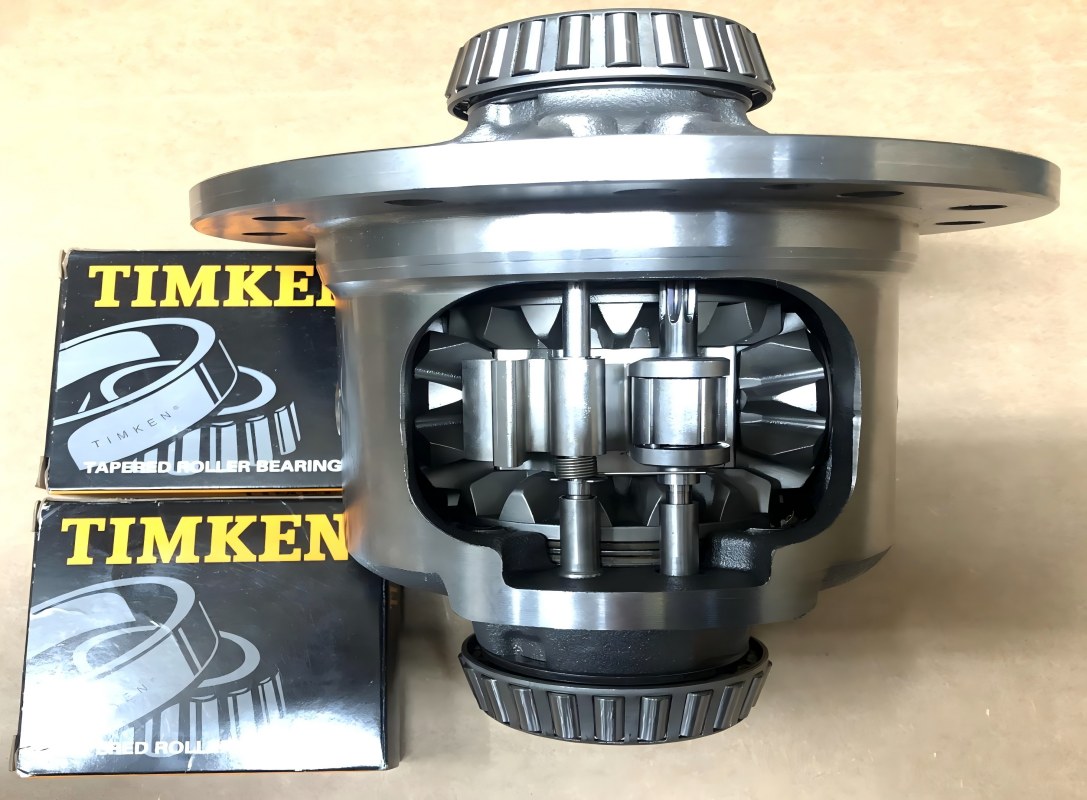
The differential is another critical part of the vehicle drivetrain.
Differential bearings support rotating components such as the differential carrier and pinion shaft while maintaining the correct relationship between the gears.
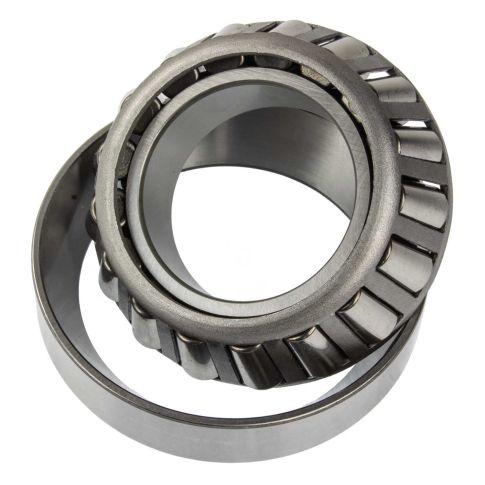
Tapered roller bearings are commonly associated with differential applications because their geometry can support combined radial and axial loading.
When sourcing a differential bearing, buyers should confirm:
Original bearing or OEM number
Cone and cup references
Bore diameter
Outside diameter
Overall width
Bearing position
Vehicle, axle, or differential model
Similar-looking tapered roller bearings should not automatically be considered interchangeable.
Small differences in geometry, internal design, or dimensions can affect installation and operating conditions.
The 804358 tapered roller bearing in the DBS Bearing catalog, for example, is listed for transmission and differential applications. Linqing Xinshengdi Bearing Co., Ltd.
3. Truck Wheel and Hub Bearings
At the wheel end, bearings operate under vehicle weight, cornering forces, road impacts, braking loads, and continuous rotation.
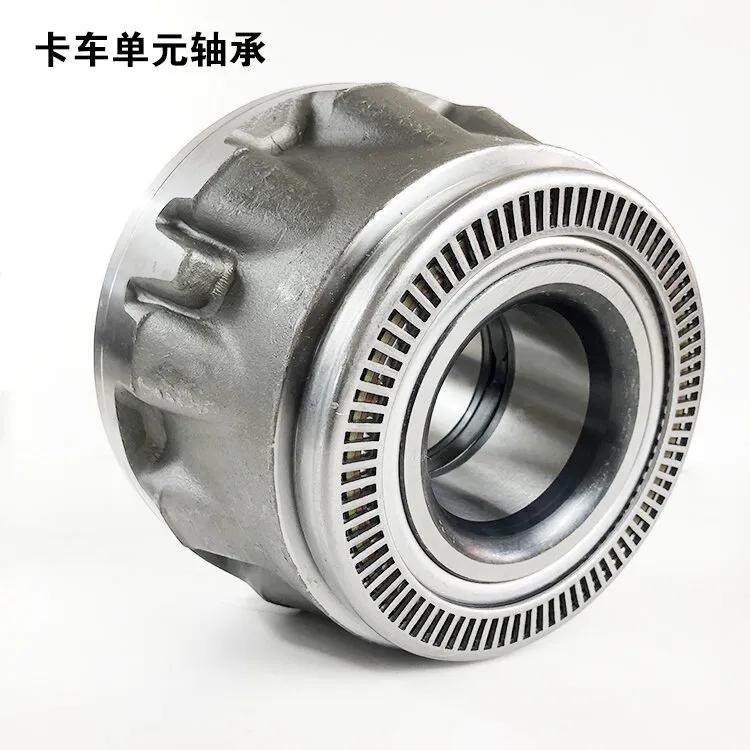
Depending on the axle and vehicle design, the wheel end may use conventional tapered roller bearings, double-row bearings, or integrated hub units.
For commercial vehicles, the correct wheel bearing arrangement is particularly important because similar trucks may use different axles or hub configurations.
The 97506 double-row tapered roller bearing is one example from the DBS catalog associated with commercial vehicle wheel hubs, heavy truck axles, and drivetrain applications. Linqing Xinshengdi Bearing Co., Ltd.
When requesting a quotation, providing the truck model alone may not be enough.
The axle model, original bearing number, photographs, and dimensions can significantly improve identification accuracy.
4. Automotive Transmission Bearings
Passenger cars and light commercial vehicles also use specialized bearings throughout their drivetrain systems.
These may appear in:
Manual transmissions
Automatic transmissions
Differentials
Wheel hubs
Clutch systems
Drive axle assemblies
Some automotive bearing numbers are highly application-specific.
For example, DBS lists the 90365-36002 transmission roller bearing as a specialized transmission bearing with the cross-reference 36RPS NR W2 X5. Linqing Xinshengdi Bearing Co., Ltd.
For aftermarket buyers, cross-referencing the original part number is often more reliable than searching by dimensions alone.
5. Why Part Numbers Matter
One of the most common problems in automotive bearing sourcing is incomplete identification.
A buyer may provide only a basic bearing number while the actual application requires a particular suffix, internal design, seal, clearance, or dimensional variation.
This is especially important for transmission and differential bearings.
Before confirming a replacement, compare:
Original part number
Check the complete reference, including prefixes and suffixes.
Dimensions
Confirm bore, outside diameter, width, and any special dimensions.
Bearing design
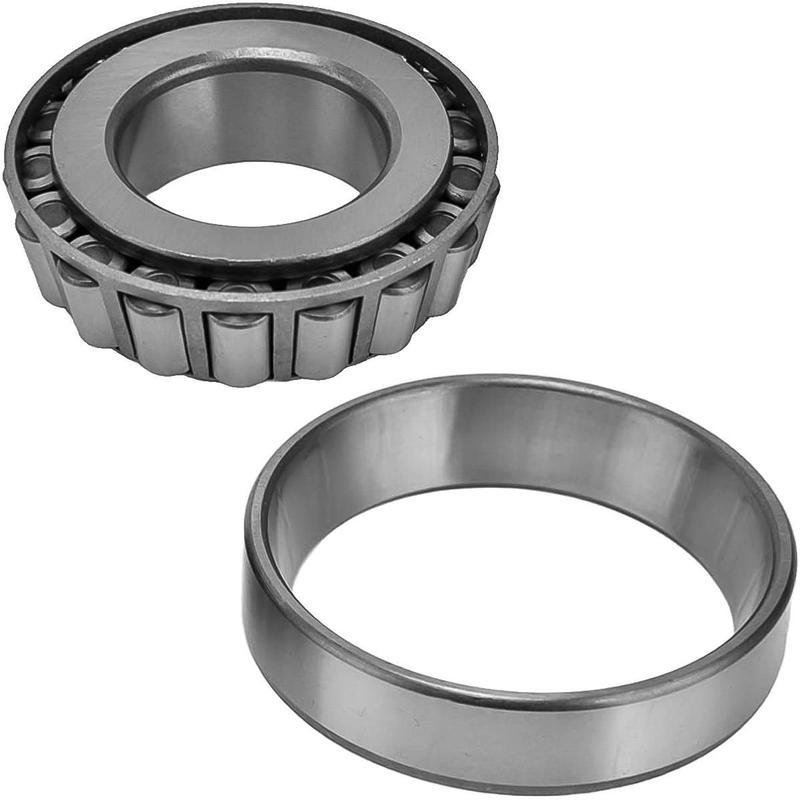
Determine whether the original uses tapered rollers, cylindrical rollers, balls, or another internal configuration.
Application position
A transmission mainshaft bearing and differential pinion bearing can experience very different operating conditions.
Vehicle or gearbox information
Provide the truck, transmission, differential, or axle model whenever available.
6. Bearings for European Truck Transmissions
European commercial vehicles create significant aftermarket demand for transmission and drivetrain replacement parts.
DBS Bearing's product range includes bearing references associated with ZF transmission applications and cross-references covering commercial vehicle platforms.
For example, the 0750 117 251 transmission bearing page contains cross-reference information covering ZF and several commercial vehicle references. Linqing Xinshengdi Bearing Co., Ltd.
Another example is 0750 117 008, which is listed for ZF transmission replacement applications. Linqing Xinshengdi Bearing Co., Ltd.
For distributors serving truck repair and transmission rebuilding markets, organizing inventory around OEM references and cross-reference numbers can make product identification easier.
7. What Should Buyers Send Us?
When requesting truck or automotive bearings, the more accurate the original information, the faster the identification process.
Useful information includes:
Original bearing number
OEM part number
Truck or vehicle model
Gearbox model
Differential or axle model
Bearing dimensions
Clear photographs
Required quantity
For difficult-to-identify bearings, a drawing or original sample may also help.
If you are unsure about the correct bearing specification, our guide on how to choose the right bearing explains several additional selection factors.
8. Aftermarket Bearing Supply from DBS Bearing
DBS Bearing supplies replacement bearing solutions for automotive and commercial vehicle applications, with increasing focus on truck, transmission, gearbox, differential, axle, and wheel hub bearings.
Our product range includes standard and specialized bearing references for aftermarket distributors, transmission rebuilders, repair businesses, and commercial vehicle parts suppliers.
We can also support OEM/private-label requirements, including customized bearing markings and packaging for suitable orders.
Rather than selecting a replacement based only on appearance, we recommend starting with the original bearing or OEM reference and then confirming the technical specifications.
Looking for a truck, gearbox, or differential bearing?
Send DBS Bearing the part number, vehicle or gearbox information, photos, and required quantity.